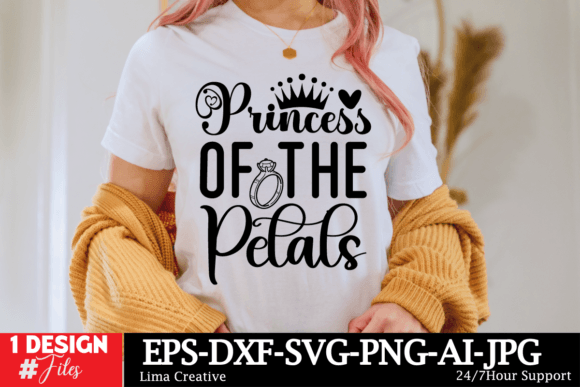
Reviewing the Princess of the Petals SVG Cut File
As a designer who spends half my life digitizing and the other half stitching, I approach every new machine embroidery design with a healthy dose of skepticism. We have all been there: downloading a file that looks stunning on a screen, only to watch it turn into a tangled mess of thread breaks and puckering on actual fabric. That is why I took a close look at the Princess of the Petals SVG Cut File before committing it to any client project. This is not just about aesthetics; it is about functionality, stitchability, and whether this asset can hold up in a real-world craft business environment.
First Impressions and Visual Personality
When I first unzipped the folder, the immediate impression was one of delicate whimsy. The title suggests a floral theme, likely targeting the bridal or nursery market, and the visual layout delivers on that promise. The shapes are organic, avoiding the rigid geometry that often plagues lower-quality design assets. For an experienced eye, the flow of the lines matters immensely. If the curves are too tight or the details too clustered, you know you are going to struggle with needle penetration and thread tension.
The mood here is soft and romantic. It feels like it belongs on items meant to be cherished rather than worn out. This is crucial because the emotional resonance of a design dictates its price point. A generic flower is a commodity; a "Princess of the Petals" is a story. For Etsy sellers and boutique owners, that narrative difference is what converts browsers into buyers. However, beauty means nothing if the file does not translate well to thread.
Real-World Application: The Tote Bag Test
To truly evaluate this file, I needed a practical scenario. I decided to test it on a heavy cotton canvas tote bag, a staple for any small shop product line. Canvas is forgiving but unforgiving in different ways; it shows puckering if the stabilizer is wrong, but it holds dense stitches well. I imagined this as part of a spring collection or a personalized wedding gift suite.
Since the product description notes this is a digital item and includes a "Word By Layer Cut File," I had to consider how these vector paths translate to embroidery. While SVGs are primarily for cutting machines like Cricut or Silhouette, many modern embroiderers use them as references for manual digitizing or import them into software that converts shapes to stitch types. If you are using this strictly as a cut file for appliqué, the layer separation is a significant time-saver. It allows you to cut individual petal shapes from contrasting fabrics, creating a textured, multi-dimensional applique design without the headache of manually tracing each element.
If you are converting this to a full embroidery file, the open spaces between petals suggest a need for careful fill management. You do not want huge blocks of satin stitch that will pull the fabric. Instead, this design begs for a combination of satin stitch outlines and lighter fill stitch patterns, perhaps even incorporating running stitch for delicate veins or stems. The result on the tote was charming, provided I kept the scale large enough to maintain detail integrity.
Navigating Fabric and Hoop Constraints
One of the most critical aspects of using any embroidery file is understanding its limitations. The Princess of the Petals SVG Cut File has intricate details that demand respect. I would advise caution when using this on stretchy fabrics like jersey knits for sweatshirt embroidery or custom apparel. Without a robust cut-away stabilizer, the fine points of the petals may distort after washing.
Similarly, consider your hoop size. If you shrink this design down to fit a small cap or a baby sock, you risk losing the definition of the individual petals. Tiny details become muddy when stitched at a small scale. For baby embroidery, I would recommend scaling it up and placing it centrally on a onesie rather than cramming it into a corner. On curved surfaces like hats, the density of the design needs to be monitored. Too much thread buildup can cause the cap to lose its shape or create uncomfortable stiffness against the forehead.
Dark fabrics present another challenge. If you are stitching this on navy or black, you must ensure high contrast in your thread colors. Pastels might get lost, so opt for vibrant or metallic threads to make the "princess" element pop. Always test on scrap fabric first. Check how the stitch density interacts with the fabric texture. A rough linen will hide minor imperfections, while smooth sateen will highlight every skipped stitch.
Commercial Viability and Brand Consistency
For those running a craft business, consistency is key. Does this design fit your brand? If you specialize in rustic, rugged gear, this might feel out of place. But if your brand leans toward feminine, elegant, or whimsical handmade products, this is a strong contender. It works beautifully for holiday embroidery projects, particularly for spring celebrations, Mother’s Day, or Easter baskets.
The value of a digital embroidery file lies in its versatility. This design could easily be adapted for pillow covers, kitchen towels, or even framed hoop art. For commercial embroidery projects, ensure you understand the licensing terms. The description mentions it is a digital download with a ZIP folder including a Bridal SVG bundle. Typically, these licenses allow for the sale of physical finished goods, but rarely allow for the resale of the digital file itself. Always confirm this before listing items on your store.
Practical Designer Notes for Best Results
- Test Before Production: Never run a new design on final merchandise. Use scrap fabric of the same weight and type to check for puckering or thread breaks.
- Check Contrast: View your design in black and white mockups. If the details disappear in grayscale, they will likely get lost in stitching too.
- Stabilizer Selection: Match your stabilizer to your fabric. Use tear-away for stable wovens and cut-away for knits or stretchy materials.
- Layer Management: Since this is a word-by-layer cut file, utilize the layers to create depth. Consider using different fabric textures for each layer if doing appliqué.
- Scale Appropriately: Ensure the design is large enough for the intended item. Do not force intricate details into tiny spaces.
In conclusion, the Princess of the Petals SVG Cut File offers a lovely aesthetic for the right projects. It is not a universal solution for every T-Shirt Designs or Graphics need, but for specific niches like bridal showers, nursery decor, and boutique apparel, it has genuine potential. With careful attention to stabilizer, thread choice, and scaling, it can elevate a simple finished product into something special. Just remember: the file is only as good as the hands that stitch it.