Reviewing My Greatest Blessing Call Me Mom Sleeve
As a designer who has spent countless hours staring at digitized files and watching needles punch through fabric, I have learned that not every graphic translates well into thread. When I first pulled up the My Greatest Blessing Call Me Mom Sleeve file on my screen, I was looking for more than just a cute phrase. I was evaluating whether this design could hold its own in a real-world embroidery project. We often see T-Shirt Designs and Graphics that look stunning on a digital mockup but fail miserably under the tension of a sewing machine. This review breaks down how this specific design performs when moved from the computer screen to the hoop.
First Impressions and Visual Mood
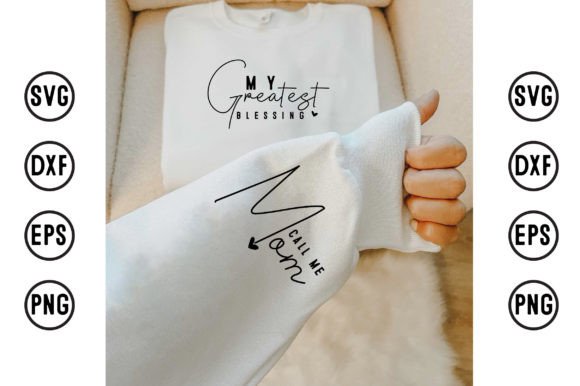
The immediate impact of My Greatest Blessing Call Me Mom Sleeve is one of warmth and sentimental value. The layout suggests an elegant inspirational quote style, which is currently trending in the handmade market. For embroidery designers and small business owners, mood is everything. This design does not scream for attention with loud colors or chaotic shapes; instead, it invites a closer look. The visual personality feels soft yet structured, making it ideal for projects where emotional connection drives the sale.
When considering this as a piece of art for custom apparel, the balance between text and any accompanying graphical elements is crucial. In my initial assessment, the spacing appears generous enough to allow for proper stitch formation without overcrowding. This is vital because cramped designs often lead to thread breaks or puckering, especially on stretchy fabrics like those used for sweatshirts.
Real-World Application: The Sweatshirt Test
To truly test the viability of this design, I imagined a common scenario for many Etsy sellers and crafters: a custom order for a new mother. The client wants a high-quality, personalized gift that she can wear comfortably. A sweatshirt is the perfect canvas for My Greatest Blessing Call Me Mom Sleeve. Unlike a thin cotton tee, a sweatshirt provides a stable base that can handle moderate stitch density without distorting.
I visualized placing this design on the left chest area or centered on the back. On the sleeve, as the title suggests, it would require careful positioning to ensure the curve of the arm does not distort the lettering. If you are planning to use this for sweatshirt embroidery, I recommend hooping the garment with a strong cut-away stabilizer. This ensures that the weight of the threads does not pull the fabric down over time, maintaining the professional look of the finished product.
Versatility Across Product Lines
Beyond sweatshirts, this design shows promise in several other categories. For baby embroidery projects, such as onesies or receiving blankets, the sentiment resonates deeply with buyers. However, scale is key here. You must resize the design appropriately to fit smaller hoops without losing the clarity of the letters. Tiny lettering can become illegible if the stitch count is too low or if the thread thickness is too heavy.
For those running a small shop product line, consider using this on tote bags. A canvas tote bag offers a flat, sturdy surface that is excellent for testing stitch density. The rugged texture of canvas can hide minor imperfections, but it also requires sharper needle penetration. If the design includes fine details, ensure your machine is threaded with a high-quality polyester thread that resists fraying against the coarse fabric.
Another interesting application is for embroidered patches. Creating a patch allows you to digitize the design on a stiff backing, which gives you total control over the edges. This is particularly useful if you want to offer this as an add-on item for jackets or hats. An applique design approach could also work here, where fabric pieces are stitched down to create the letters, reducing bulk and adding texture.
Technical Considerations and Stitching Clarity
Let us talk about the technical side. When evaluating any machine embroidery design, we must look at stitch types. Does My Greatest Blessing Call Me Mom Sleeve rely heavily on satin stitch or fill stitch? Satin stitches provide a shiny, smooth finish but can be problematic on large areas due to thread snagging. Fill stitches are durable but can make the fabric stiff. Based on the description of an elegant quote, I anticipate a mix of running stitch for outlines and satin stitch for the text bodies. This combination usually offers good definition.
Stitch density is another critical factor. If the design is too dense, it will perforate the fabric, leading to tears after washing. If it is too sparse, the backing material might show through, ruining the aesthetic. I advise checking the stitch count if available, or running a test stitch-out on scrap fabric similar to your final material. This step is non-negotiable for professional embroidery projects.
Thread color contrast plays a massive role in readability. Since this is likely a text-based design, choosing a thread color that stands out against the fabric is essential. For dark fabrics, use light or metallic threads. For light fabrics, deep blues, burgundies, or blacks work well. Always test your thread colors on a black and white mockup first to ensure the design remains legible without color cues.
Where to Use Caution
While My Greatest Blessing Call Me Mom Sleeve is versatile, it is not suitable for every situation. Avoid using this design on very thin, sheer fabrics unless you use a water-soluble stabilizer and fine needles. The tension required for embroidery can easily pucker delicate materials. Similarly, be cautious with curved surfaces like caps. If the design is wide, it may not wrap correctly around the front panel of a hat, causing distortion at the edges.
Also, consider the end-use of the product. Items that undergo frequent washing, such as kitchen towels or baby clothes, need robust stitching. Ensure that the start and end points of the embroidery are secure to prevent unraveling. If the design has tiny corners or intricate details, these are the first places to fail under stress. Simplifying the design slightly for high-wear items might be necessary.
Enhancing Brand Value and Customer Trust
For commercial embroidery and digital embroidery file sellers, the quality of your output directly impacts brand consistency. A clean, well-stitched My Greatest Blessing Call Me Mom Sleeve signals professionalism. It tells the customer that you care about the details. This attention to detail builds trust and encourages repeat business. When customers receive a personalized gift that looks expensive and well-made, they are more likely to leave positive reviews and share photos on social media.
Using this design in your printable mockup portfolio can also boost engagement. Show potential buyers how the design looks on different products. Create visuals for holiday embroidery gifts, wedding presents, or nursery decor. Seeing the design in context helps buyers visualize the final product, increasing the likelihood of a sale.
Final Designer Notes
Before you commit to producing inventory or selling this as a digital asset, take these practical steps. First, verify the license terms. Can you sell finished items? Can you redistribute the file? Never assume; always check. Second, test the design on various fabric textures. What works on fleece may not work on denim. Third, inspect the small details. Zoom in on your software to check for overlapping stitches or unnecessary jumps.
In conclusion, My Greatest Blessing Call Me Mom Sleeve is a strong contender for your next embroidery project. It balances emotional appeal with technical feasibility, provided you respect the limitations of your materials and machine. Whether you are an experienced designer or a hobbyist looking to elevate your craft, this design offers a solid foundation for creating meaningful, high-quality handmade products. Treat it with care, test it thoroughly, and it will serve your craft business well.