Happy Easter Egg Tacos Bunny: A Designer’s Review
As an embroidery designer who has spent countless hours digitizing and testing files for client projects, I approach every new machine embroidery design with a critical eye. It is not enough for a graphic to look cute on a screen; it must translate flawlessly into thread and fabric. Recently, I evaluated the Happy Easter Egg Tacos Bunny Easter file to determine its viability for real-world applications. This review breaks down how this whimsical concept performs when moved from a digital asset to a tangible, stitched product.
First Impressions and Visual Personality
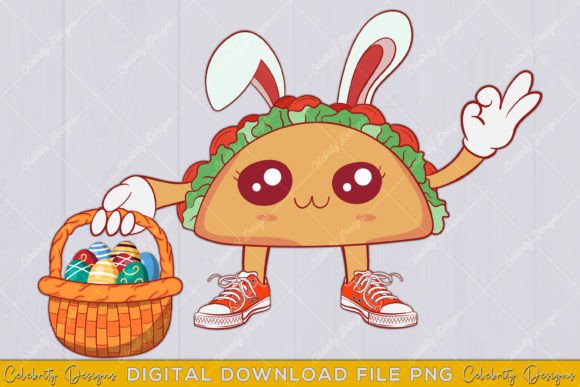
The initial appeal of the Happy Easter Egg Tacos Bunny Easter lies in its playful fusion of two unrelated cultural icons: the Easter bunny and the taco. This juxtaposition creates an immediate sense of humor and novelty. For designers, the layout appears balanced, with the bunny character integrated seamlessly into the taco shell structure. The mood is lighthearted and festive, making it an ideal candidate for spring-themed collections.
When reviewing such Graphics, I look for clean lines and distinct shapes. Complex gradients often fail in embroidery, but this design relies on bold forms that suggest it will stitch out clearly. The visual personality is quirky, which helps it stand out in a saturated market of traditional floral or religious Easter motifs. It feels modern, appealing to a younger demographic or those who appreciate ironic holiday humor.
Real-World Application Scenarios
To truly test a design, you must imagine it on actual products. I envisioned using this Happy Easter Egg Tacos Bunny Easter motif on a canvas tote bag. The sturdy texture of canvas provides an excellent base for the likely fill stitches required for the bunny’s body and the taco shell. In this context, the design acts as a statement piece, transforming a generic bag into a unique handmade product.
Another strong candidate is sweatshirt embroidery. Placing this design on the left chest of a heather grey crewneck offers a subtle yet charming accent. However, due to the potential width of the taco shape, it might work better as a larger back print or centered on the front of a youth-sized garment. For baby embroidery, such as on a onesie or bib, the softness of the theme fits well, provided the stitch density is adjusted to remain gentle against sensitive skin.
I also considered its use in holiday embroidery for kitchen textiles. An embroidered tea towel featuring this bunny could become a popular seasonal item for small shops. The contrast between the bright colors of the taco ingredients and the neutral linen would create high visual impact, driving buyer engagement.
Technical Considerations for Stitching
While the concept is strong, the execution depends on technical factors. Since the product description mentions an editable PNG file rather than a native embroidery file format like PES or DST, users must be aware that this is primarily a T-Shirt Designs graphic intended for print or sublimation. If you plan to use this for machine embroidery, you will need to digitize it yourself or convert it using specialized software. This is a crucial distinction for Etsy sellers and craft business owners who may assume it is ready-to-stitch.
If you proceed with digitizing or using a converted version, pay close attention to stitch density. The taco shell area might require a satin stitch border to define the edge, while the bunny’s fur could benefit from a lighter fill stitch to prevent puckering. On stretchy fabrics, such as t-shirts, a cut-away stabilizer is essential to maintain shape integrity. For woven fabrics like aprons or pillow covers, a tear-away stabilizer may suffice, but always test on scrap fabric first.
Small details are where designs often fail. The eyes of the bunny and the intricate layers of the taco filling must be large enough to stitch cleanly. If the original graphic has tiny elements, they may need to be simplified or enlarged during the digitizing process. Running a test stitch-out on similar fabric is non-negotiable. Check for thread breaks, jumps, and overall clarity before committing to a final finished product.
Fabric and Hoop Constraints
The size of your hoop dictates where this design can go. A standard 5x7 inch hoop might accommodate the design if scaled down, but a 4x4 inch hoop could crop essential elements. Always confirm the dimensions of the source file. For curved surfaces like caps, the design’s width must be narrow enough to fit within the cap frame without distortion. Textured fabrics, such as terry cloth towels, require higher stitch counts to ensure the design remains visible above the pile.
Dark fabrics present another challenge. If the design relies on light thread colors for the bunny, ensure there is sufficient underlay stitching to prevent the dark fabric from showing through. Conversely, on light fabrics, dark outlines can provide necessary definition. Testing the design in black and white mockups can help you assess contrast issues before threading the machine.
Commercial Viability and Brand Consistency
For commercial embroidery projects, uniqueness drives sales. The Happy Easter Egg Tacos Bunny Easter design offers a niche appeal that can differentiate your brand. It fits well within a lineup of humorous holiday items, appealing to customers looking for something beyond the traditional. However, consistency is key. Ensure that the color palette you choose aligns with your brand’s aesthetic. Using vibrant, spring-like thread colors can enhance the festive mood, while muted tones might give it a vintage feel.
When selling personalized gift items, such as custom apparel or embroidered patches, the quality of the stitch-out reflects directly on your professionalism. A clean, well-digitized version of this design can build customer trust and encourage repeat business. Include high-quality photos of the stitched item in your listings, showing close-ups of the texture and detail. This transparency helps buyers understand the value of handmade goods.
Final Verdict and Practical Advice
The Happy Easter Egg Tacos Bunny Easter is a charming concept with strong potential for various embroidery project types. Its success, however, hinges on proper preparation. Since the provided file is a PNG, it serves best as a reference for digitizers or for print-on-demand services. If you are an embroiderer, treat this as a starting point for creating your own digital embroidery file.
- Verify licensing terms before selling finished items or digital assets.
- Digitize with appropriate stitch types: satin for borders, fill for large areas.
- Test on multiple fabric types to determine optimal stabilizer usage.
- Adjust size to fit your specific hoop constraints.
- Use high-contrast thread colors to enhance visibility on textured materials.
In conclusion, this design brings a fresh, humorous twist to Easter decor. With careful attention to technical details and material selection, it can become a standout item in your small shop product lineup. Whether used for a fun tote bag design or a quirky embroidered patch, the Happy Easter Egg Tacos Bunny Easter offers a delightful blend of creativity and commercial appeal for the discerning maker.