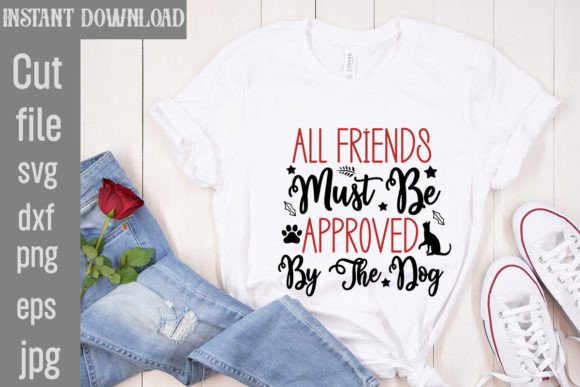
All Friends Must Be Approved by the Dog Design Review
As a designer who has spent years navigating the intersection of digital files and physical thread, I approach every new asset with a critical eye. When I first opened the All Friends Must Be Approved by the Dog file, I wasn't just looking for a cute phrase; I was evaluating its potential as a commercial embroidery design. The concept is instantly recognizable to any dog lover, but does it translate well from a screen to a finished product? For an Etsy seller or a small shop owner, the difference between a hit item and a return often lies in how well the design handles the realities of stitching.
First Impressions: Visual Weight and Mood
The immediate appeal of All Friends Must Be Approved by the Dog lies in its straightforward, bold personality. As a graphic intended for T-Shirt Designs, it relies on strong lines and clear typography rather than intricate shading. In the world of machine embroidery design, this is a significant advantage. Complex gradients can turn into muddy blobs when converted to fill stitch, but this design's clean vector nature suggests it will hold up beautifully. The layout feels balanced, offering a focal point that works equally well centered on a chest pocket or spanning the back of a sweatshirt.
However, visual clarity on a monitor does not always guarantee success under the needle. Before committing to a client project, I always consider the mood the design evokes. This piece screams "playful" and "welcoming," making it perfect for personalized gifts or boutique branding. It has that universal charm that makes a customer smile immediately upon seeing the mockup. But as we move from the digital preview to the hoop, the real work begins.
Real-World Application: From File to Fabric
Let's imagine a specific scenario: I am preparing a custom embroidered tote bag for a local craft fair. The fabric is a sturdy canvas, which is ideal for holding structure. I load the All Friends Must Be Approved by the Dog embroidery file into my software. Because the download includes SVG, DXF, EPS, and PNG formats, I have flexibility. While the SVG and DXF are great for cutting machines like Cricut or Silhouette, for actual stitching, I need to ensure the vector paths convert cleanly into a digitized format if the file provided is purely a vector outline.
If you are using this as a base for an applique design, the clean edges of the text and the dog silhouette (assuming a standard interpretation of the theme) allow for precise satin stitch borders. Satin stitch adds a professional sheen that elevates the handmade product. However, if you are running this as a full fill stitch on a textured fabric like fleece or a heavy cotton blend, you must pay close attention to stitch density. Too dense, and the fabric pucker; too loose, and the design loses definition. For a sweatshirt embroidery project, the stretch of the material requires careful stabilizer selection to prevent distortion during the wash cycle.
Choosing the Right Canvas
This design shines on custom apparel where the message needs to be read quickly. A baby embroidery project featuring this phrase would be adorable on a onesie, provided the font size is scaled appropriately so the details don't get lost. Similarly, an embroidered patch version could be sewn onto denim jackets or backpacks, serving as a durable accessory. For holiday embroidery, this fits perfectly into gift sets, perhaps paired with a paw print motif. The key is ensuring the design assets remain crisp regardless of the scale.
When I test this on a printable mockup, the contrast is striking. On dark fabrics, the design demands high-contrast thread colors to maintain visibility. A white or light grey thread against a navy background creates a premium look, whereas a similar tone-on-tone might disappear on a busy pattern. Always test your thread colors against the actual fabric swatch before starting a commercial embroidery run.
Navigating Technical Challenges
Even the best designs have limitations. There are specific situations where All Friends Must Be Approved by the Dog requires extra caution. If you are working with very small hoop sizes, such as those used for caps or hats, the detail level might become compromised. Tiny lettering can merge together if the running stitch or fill stitch isn't optimized for that scale. Curved surfaces like baseball caps also present a challenge; the design may need to be adjusted to follow the curve without distorting the text.
Furthermore, thin or stretchy fabrics require a robust stabilizer strategy. Without proper support, the tension of the machine can cause the fabric to warp, ruining the alignment of the text. If you are creating layered garments, ensure the stitching doesn't bleed through to the front or create uncomfortable bumps on the inside. Dense stitch areas should be avoided on delicate materials to prevent tearing over time. Products that need frequent washing, like kitchen towels or aprons, demand a design that is secure and resistant to fraying at the edges.
Practical Designer Notes for Success
To ensure your finished product meets professional standards, here are my essential recommendations for using this design:
- Test on Scrap Fabric First: Never skip this step. Run a test on the exact fabric and stabilizer combination you plan to use for the final order. Check for puckering and registration issues.
- Verify Stitch Density: Adjust the density settings in your software if the default conversion looks too heavy or too light for your chosen thread count.
- Confirm Hoop Size: Ensure the design fits comfortably within your hoop with enough margin for the clamps. If it's too tight, the fabric will shift.
- Inspect Small Details: Zoom in on the digital file to check for any jagged lines or tiny gaps that might cause thread breaks or skipped stitches.
- Use Proper Stabilizer: Whether it's cutaway for knits or tear-away for wovens, the right stabilizer is the backbone of a successful embroidery project.
- Check Licensing: Since this is a digital download, confirm the license terms regarding selling finished items. Some licenses restrict the number of products you can sell, while others offer unlimited commercial use.
Impact on Brand and Customer Trust
Ultimately, the value of All Friends Must Be Approved by the Dog lies in its ability to connect with customers. A well-executed embroidery project signals quality and care. When a buyer receives a tote bag or a shirt with this design stitched flawlessly, their trust in your brand increases. It transforms a simple graphic into a tangible memory. For a craft business, consistency is key; using high-quality design assets ensures that every item leaving your shop represents your reputation.
The visual appeal of the design directly influences buyer engagement. In a crowded market like Etsy, a clear, bold, and professionally stitched product stands out in photos and in person. It enhances the giftability of the item, making it a safe bet for anyone looking for a unique present for a dog owner. By treating this digital file with the respect it deserves—testing, stabilizing, and executing with precision—you turn a simple download into a cornerstone of your handmade inventory.
In conclusion, while All Friends Must Be Approved by the Dog starts as a digital graphic, its true potential is unlocked through skilled application. It is a versatile asset for T-Shirt Designs and beyond, capable of elevating everything from baby clothes to holiday gifts. With the right technical approach, it becomes more than just a phrase; it becomes a statement of style and a testament to the craftsmanship of the maker.